Ghazni and the Road to India
The Ghaznavid capital and the campaigns into India, c. 1026 CE
417 AH / c. 1026 CE
 Educational historical reconstruction
Where
Ghazni, the Ghaznavid capital, in the highlands of present-day Afghanistan
33.5519, 68.4173 · View on OpenStreetMap
Background
Ghazni, a fortified city high in the cold mountains of present-day eastern Afghanistan, was the capital of the Ghaznavid dynasty, a Turkic Muslim house that rose from the service of the Samanids to rule an empire straddling Khurasan and the gate of the Indian subcontinent. Under its most famous sultan, Mahmud of Ghazni (reigned 998-1030), the state reached its height, and Mahmud led a long series of campaigns down the roads and passes into the plains of India, the most renowned being the great raid of about 1025-1026 on the immensely wealthy Hindu temple of Somnath on the coast of Gujarat, from which he carried off vast plunder. These campaigns, recorded by the court historian al-Utbi in his Tarikh al-Yamini, by the polymath al-Biruni, and by Ibn al-Athir, brought enormous wealth and captives back to Ghazni and opened the long engagement of Muslim power with the subcontinent that the Ghurids and the Delhi Sultanate would carry further. Mahmud's court was not only a war-camp: it drew to Ghazni some of the great minds of the age, among them al-Biruni, who while in Ghaznavid service wrote his careful and famous study of India, the Tahqiq ma li-l-Hind, and the Persian poet Firdawsi, author of the Shahnama, so that learning and conquest were joined in one capital. This scene depicts Ghazni and the road to India: the mountain citadel and its tall brick towers above the river valley, and a campaign caravan returning laden with the spoils of the plains. It shows the capital and the route, without any graphic depiction of the sack of Somnath itself.
What you see
A fortified inland capital high in the cold mountains of what is now Afghanistan, a citadel and tall baked-brick towers above a river valley, the seat of a powerful Turkic Muslim dynasty far from the Indian plains it raided.
A campaign caravan returns to the city laden with the spoils of India, strings of camels and carts of treasure and captives brought back from the rich temple-cities of the plains.
A road runs south and east from the city down toward the passes and the Indian lowlands, the line by which the sultan led campaign after campaign into the subcontinent.
This is the Ghaznavid state at its height under Mahmud (reigned 998-1030), a Turkic Muslim power astride Khurasan and the gate of India, whose most famous campaign was the long raid on the wealthy coastal temple of Somnath in Gujarat; the beginning of the lasting Muslim engagement with the subcontinent.
The same court that enriched itself by these campaigns also drew scholars and poets to Ghazni, among them al-Biruni, who wrote his great study of India, and the poet Firdawsi; learning and war in one capital.
The campaigns of Mahmud are recorded by al-Utbi (Tarikh al-Yamini), al-Biruni and Ibn al-Athir. The depiction is of the capital and the campaign road, with no graphic scene of the sack of Somnath.
Primary sources
Ibn al-Athir, al-Kamil fi al-Tarikh (13th c.): Standard Sunni history for the Ghaznavid campaigns and the raid on Somnath.
Further reading & cross-references
al-Utbi, Tarikh al-Yamini (early 11th c.): The court history of Mahmud of Ghazni and his campaigns; the principal contemporary Muslim source.
al-Biruni, Tahqiq ma li-l-Hind (Kitab al-Hind) (11th c.): The great study of India written in Ghaznavid service; used for the engagement with India and the cultural side of the court.
C. E. Bosworth, The Ghaznavids (modern academic): Modern synthesis for the dynasty, the reign of Mahmud and the chronology of the campaigns. Non-confessional cross-reference.
The monuments of Ghazni (extant, material): The citadel, the tomb of Mahmud and the famous standing victory towers of Ghazni; note the surviving twin towers are of the 12th century, later than Mahmud, and are used here only as enduring markers of the capital.
Questions & answers
- Where is Ghazni and the Road to India?
- Ghazni, the Ghaznavid capital, in the highlands of present-day Afghanistan
- When did it happen?
- 417 AH / c. 1026 CE
- What is the story of Ghazni and the Road to India?
- Ghazni, a fortified city high in the cold mountains of present-day eastern Afghanistan, was the capital of the Ghaznavid dynasty, a Turkic Muslim house that rose from the service of the Samanids to rule an empire straddling Khurasan and the gate of the Indian subcontinent. Under its most famous…
Related places

The Minaret of Jam
c. 590 AH / 1190s CE

Mahmud of Ghazna's Indian Campaigns
Ghaznavid campaigns (388-421 AH / 998-1030 CE)

The Mongol Storm at Bukhara
617 AH / 1220 CE
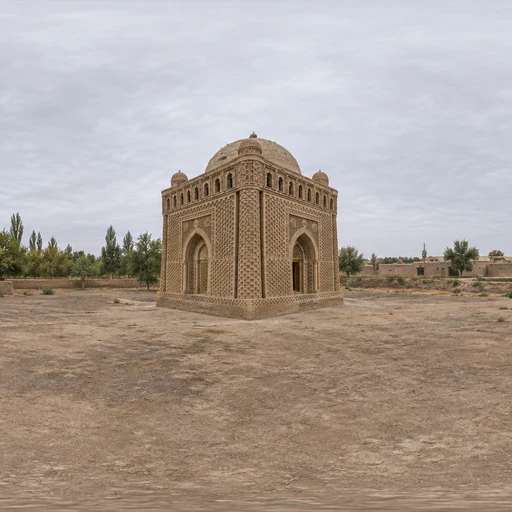
The Samanid Mausoleum at Bukhara
c. 300 AH / c. 914 CE

The Battle of Tarain
588 AH / 1192 CE

After the Mongol Storm at Nishapur
618 AH / 1221 CE
Guess places like this in GeoSiyer
Drop into a 360° scene from Islamic history and pin where, and when, it happened.
Play GeoSiyer