The Nation of Islam in America
An African-American movement, c. 1965 CE
1385 AH / c. 1965 CE
 Educational historical reconstruction
Where
An American city (the Nation of Islam in the urban north), representative
41.8319, -87.6198 · View on OpenStreetMap
Background
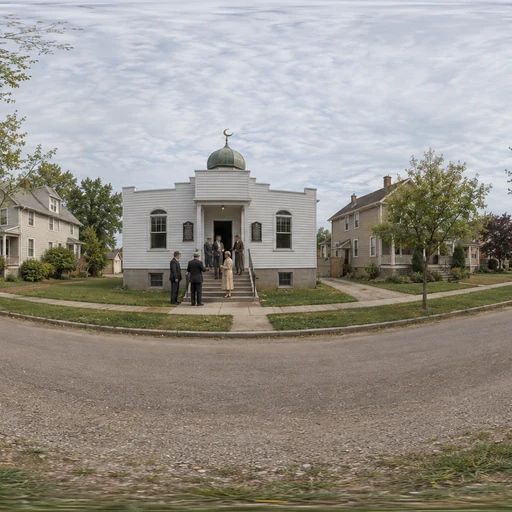
The Nation of Islam was a movement that rose among African-Americans in the twentieth-century United States, founded around 1930 and led for decades by Elijah Muhammad from its base in Chicago. Taking the name of Islam, it preached to black Americans a message of self-respect, discipline, moral reform, economic self-reliance and separation from a white society that oppressed them, and it built temples, schools, farms and businesses and a disciplined community life across the cities of the industrial north, to which great numbers of black Americans had migrated. It drew large numbers and produced figures of national fame, most famously Malcolm X, and it gave many people dignity, sobriety and purpose in the face of harsh racism. Yet the movement's own doctrines were heterodox and stood apart from the Islam of the worldwide Muslim community: it taught a racial theology and made claims about its founder and leaders that orthodox Islam, which holds to the absolute oneness of God and the finality of the Prophet Muhammad (peace and blessings be upon him), does not accept, and the world's Muslims did not recognise its teachings as orthodox Islam. The turning point came after the death of Elijah Muhammad in 1975: the main body of the movement, under his son Warith Deen Mohammed, deliberately set aside its heterodox doctrines and led its hundreds of thousands of followers into mainstream Sunni Islam, in one of the largest such transformations of modern times (a smaller splinter under Louis Farrakhan later revived the old movement). This scene depicts the Nation of Islam in its earlier, separate phase, around the 1960s: the plain meeting-hall and storefront temple, the businesses and the ordered community life, in a city of the American north. In keeping with the project's ethics any figures are anonymous and at a distance.
What you see
A plain meeting-hall and a converted storefront on a street of a mid-twentieth-century American city, neat and orderly, serving as the temple and community centre of an organised movement in a black urban neighbourhood.
The cars, dress and signs are those of the United States in the 1960s; the community runs its own businesses, schools and a disciplined civic life, a movement of self-reliance and dignity among African-Americans.
This is the world of the Nation of Islam, a movement that rose among black Americans in the twentieth century, preaching self-respect, discipline and separation in the face of racism, under the name of Islam but with its own distinct and heterodox teachings.
The movement drew great numbers and produced figures of national fame; but its doctrines, including its racial theology and its claims about its founders, set it apart from the Islam of the worldwide Muslim community, which did not recognise them as orthodox.
After the death of its long-time leader in 1975, the main body of the movement, under his son Warith Deen Mohammed, abandoned these heterodox teachings and brought its followers into mainstream Sunni Islam, one of the largest such turnings in modern times. The scene shows the community in its earlier, separate phase.
The setting is a city of the industrial north of the United States, to which great numbers of black Americans had migrated, and where the movement had its strongholds.
Further reading & cross-references
Histories of the Nation of Islam (Elijah Muhammad, Malcolm X, the movement in the cities): Used for the rise, the message of self-reliance and discipline, and the movement's reach among African-Americans.
Accounts of the heterodox doctrines of the Nation of Islam and the response of orthodox Islam: Used for the distinct teachings that set the movement apart from mainstream Islam, framed factually.
Accounts of Warith Deen Mohammed's reform and the turn to Sunni Islam (1975-1976): Used for the main body's abandonment of the heterodox teachings and entry into mainstream Sunni Islam, and the Farrakhan splinter.
Histories of African-American Muslims and the urban north: Used for the migration and the setting of the movement in the northern cities.
Questions & answers
- Where is The Nation of Islam in America?
- An American city (the Nation of Islam in the urban north), representative
- When did it happen?
- 1385 AH / c. 1965 CE
- What is the story of The Nation of Islam in America?
- The Nation of Islam was a movement that rose among African-Americans in the twentieth-century United States, founded around 1930 and led for decades by Elijah Muhammad from its base in Chicago. Taking the name of Islam, it preached to black Americans a message of self-respect, discipline, moral…



Guess places like this in GeoSiyer
Drop into a 360° scene from Islamic history and pin where, and when, it happened.
Play GeoSiyer