The Ark of Nuh Comes to Rest on al-Judi
After the flood, the ark settles on the mountain of al-Judi (Q 11:44)
The time of Nuh (peace be upon him), after the Flood
 Educational historical reconstruction
Where
Cudi Dağı (Jabal al-Judi), south-eastern Anatolia near the Tigris
37.3833, 42.3667 · View on OpenStreetMap
Background
The Qur'an records the landing of the ark of Nuh (peace be upon him) on the mountain of al-Judi after the great flood principally in Surat Hud (Q 11:25-49), with parallel treatments in Surat al-A'raf (Q 7:59-64), Surat al-Mu'minun (Q 23:23-30), Surat al-Shu'ara' (Q 26:105-122), Surat al-Qamar (Q 54:9-15), and the dedicated Surat Nuh (Q 71). The moment of the landing is Q 11:44: wa-qila ya ardu ibla'i ma'aki wa-ya sama'u aqli'i wa-ghida al-ma'u wa-qudiya al-amru wa-staqarrat 'ala al-Judi, 'And it was said: O earth, swallow your water; and O sky, withhold; and the water subsided, and the matter was concluded, and it came to rest upon al-Judi.' The Sunni tafsir tradition (al-Tabari's Jami' al-Bayan, Ibn Kathir's Tafsir al-Qur'an al-'Azim, al-Qurtubi's al-Jami' li-Ahkam al-Qur'an) unanimously identifies al-Judi with the mountain of Cudi Dağı in modern south-eastern Turkey near the Tigris, distinct from the Mount Ararat tradition of the Christian Old Testament. The Sunni qisas al-anbiya' tradition (Ibn Kathir's Qisas al-Anbiya', al-Tha'labi's 'Ara'is al-Majalis, al-Tabari's Tarikh opening volumes) preserves the construction of the ark (a great wooden vessel of multiple levels sealed with pitch, Q 11:38), the loading of pairs of every kind (Q 11:40), the embarkation of the family of Nuh (peace be upon him) and those who believed with him, the rejection by Nuh's (peace be upon him) son who tried to take refuge on a mountain (Q 11:42-43), and the long flood. The Sunni tradition holds Nuh (peace be upon him) as the second of the ulu al-'azm (the prophets of resolve, Q 46:35) after Adam (peace be upon him), and the survivors of the ark as the parents of all subsequent generations of humanity. The Qur'an describes Nuh (peace be upon him) calling his people for nine hundred and fifty years (Q 29:14) before the flood. The dating is by anchor (the time of Nuh peace be upon him); the Sunni qisas tradition does not fix a year. This scene depicts the moments after the landing: the ark grounded on the bare shoulder of the mountain, the floodwaters retreating in the valley below, the small clay vessel of bread set out on the rocky outcrop near the prow. The prophet Nuh (peace be upon him) is not depicted; the Sirah-tier visual ethics observed.
What you see
A bare mountain ridge rising above a wide valley still glistening with retreating floodwater. The slopes are scoured clean of vegetation; the air after the storm is silver-grey.
On a shoulder of the mountain, a great wooden vessel lies grounded, the ark of Nuh (peace be upon him). The hull is dark, sealed with pitch (Q 11:38 the Qur'anic record); the deck has multiple levels (Q 23:27, Q 71:14-17 on the construction). Plank-by-plank dressed timber; no anachronistic detail.
The Qur'an records the moment in Q 11:44: wa-qila ya ardu ibla'i ma'aki wa-ya sama'u aqli'i wa-ghida al-ma'u wa-qudiya al-amru wa-staqarrat 'ala al-Judi, 'And it was said: O earth, swallow your water; and O sky, withhold; and the water subsided, and the matter was concluded, and it came to rest upon al-Judi.' The Sunni tafsir tradition unanimously identifies al-Judi with the mountain of Cudi Dağı in modern south-eastern Turkey, distinct from the Mount Ararat tradition.
On a rocky outcrop near the prow, a small clay vessel of bread set out, the Sunni qisas tradition records the dispatch of birds (a raven, then a dove) to test whether the waters had withdrawn enough for landing. No figures depicted.
The Qur'anic narrative of Nuh (peace be upon him), the second of the ulu al-'azm (Q 46:35) after Adam (peace be upon him), is the foundational warning of divine judgement on a people who reject the prophets. The flood is the second great divine act of the human story; the Sunni tradition holds the survivors as the parents of all subsequent generations.
The light is the cool light of the morning after, the sky still grey, the floodwaters still glittering in the valley below. The dating is by anchor: the time of Nuh (peace be upon him); the Sunni qisas tradition places him many generations before Ibrahim (peace be upon him), with no firm year.
The narrative: Q 11:25-49 (the principal Qur'anic passage), Q 7:59-64, Q 23:23-30, Q 26:105-122, Q 54:9-15, Q 71 (Surat Nuh). The Sunni qisas: Ibn Kathir, Qisas al-Anbiya'; al-Tha'labi; al-Tabari.
Primary sources
The Qur'an, Surat Hud (Q 11:25-49), Surat Nuh (Q 71), and parallels: The principal Qur'anic passages on Nuh (peace be upon him) and the flood.
Ibn Kathir, Qisas al-Anbiya' and Tafsir al-Qur'an al-'Azim: Standard Sunni stories of the prophets and Qur'anic commentary. The chapter on Nuh (peace be upon him) preserves the narrative in detail.
al-Tabari, Tarikh al-Rusul wa-al-Muluk and Jami' al-Bayan: Standard Sunni history and tafsir; the opening volumes treat the pre-Ibrahimi prophets.
al-Tha'labi, 'Ara'is al-Majalis fi Qisas al-Anbiya': Earlier Sunni qisas compilation.
Further reading & cross-references
Q 11:44 (the verse on al-Judi): The Qur'anic identification of the landing mountain. The Sunni tafsir tradition unanimously identifies it with Cudi Dağı in south-eastern Turkey.
Yaqut al-Hamawi, Mu'jam al-Buldan (13th c.): Standard Sunni geographical encyclopaedia; the entry on al-Judi preserves the Sunni topographical identification.
Questions & answers
- Where is The Ark of Nuh Comes to Rest on al-Judi?
- Cudi Dağı (Jabal al-Judi), south-eastern Anatolia near the Tigris
- When did it happen?
- The time of Nuh (peace be upon him), after the Flood
- What is the story of The Ark of Nuh Comes to Rest on al-Judi?
- The Qur'an records the landing of the ark of Nuh (peace be upon him) on the mountain of al-Judi after the great flood principally in Surat Hud (Q 11:25-49), with parallel treatments in Surat al-A'raf (Q 7:59-64), Surat al-Mu'minun (Q 23:23-30), Surat al-Shu'ara' (Q 26:105-122), Surat al-Qamar (Q…
Related places

Yunus and Nineveh Repenting
The time of Yunus (peace be upon him), at Nineveh
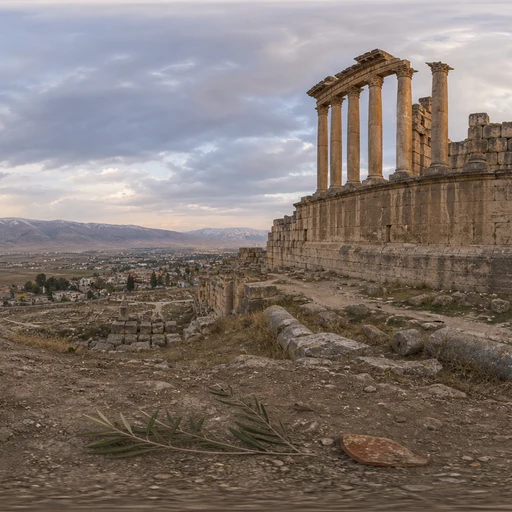
Ilyas at Baalbek
Time of Ilyas (peace be upon him)

The First Burial
Time of Adam (peace be upon him)

Ibrahim and the Smashed Idols
The time of Ibrahim (peace be upon him)

The Table and the Disciples
The ministry of 'Isa (peace be upon him), Roman-period Galilee

Sulayman's Temple and Throne
The reign of Sulayman (peace be upon him)
Guess places like this in GeoSiyer
Drop into a 360° scene from Islamic history and pin where, and when, it happened.
Play GeoSiyer