The Sultanate of Samudra Pasai
Islam's first foothold in the archipelago, c. 1345 CE
c. 746 AH / 1345-1346 CE
 Educational historical reconstruction
Where
Samudra Pasai, on the north coast of Sumatra
5.1833, 97.1500 · View on OpenStreetMap
Background
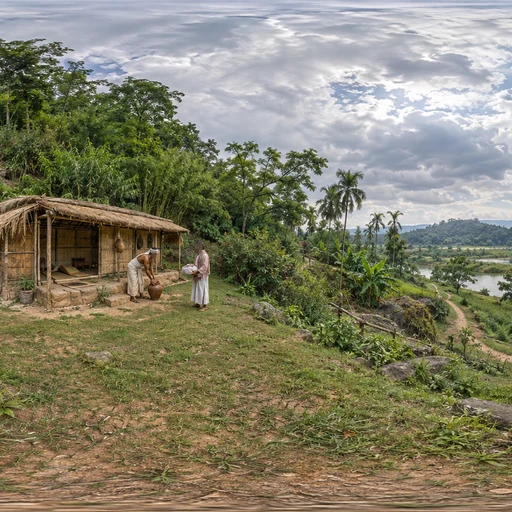
Samudra Pasai, on the northern coast of the great island of Sumatra, at the western gateway of the East Indies, was the first Muslim sultanate of the Malay archipelago, founded in the later thirteenth century when its ruler embraced Islam, and it became the beachhead from which the faith, carried for centuries by the Muslim merchants of the Indian Ocean trade, began to take root and spread through the islands of what is now Indonesia and Malaysia. It owed its rise to its position and its pepper: it stood upon the Strait of Malacca, through which the whole sea-trade between India and China had to pass, and it grew rich exporting the pepper of its forest gardens to the ships of all nations. When the Moroccan traveller Ibn Battuta broke his long voyage there about 1345, on his way toward China, he found a flourishing and devout Muslim kingdom; he describes the sultan, al-Malik al-Zahir, as a pious and humble ruler of the Shafi'i school, much given to war against the unbelievers of the island in the way of God, who gathered scholars, jurists and Qur'an-readers about him, sat in learned discussion of the law after the Friday prayer, and walked to the mosque on foot; and the traveller was lodged and honoured as a distinguished guest. That so new and so distant an outpost should keep the prayer, the law and the learning of Islam so faithfully struck him, and it marks the beginning of the great history of Islam in Southeast Asia, the most populous Muslim region of the later world, won not by conquest from the heartlands but by the slow work of traders and preachers and the conversion of kings. This scene depicts the port of Samudra Pasai and its pepper-coast. In keeping with the project's ethics any figure is anonymous and at a distance.
What you see
A wooden town and harbour on the lush tropical coast of a great equatorial island, backed by dense green jungle and pepper-gardens, with ships at anchor in a river-mouth; a port at the gateway between the Indian Ocean and the seas of the farther east.
This is Samudra Pasai, the first Muslim sultanate of the great archipelago of the East Indies, on the northern tip of Sumatra, the beachhead from which Islam, carried by the merchants of the Indian Ocean, began to spread through the islands of the Malay world.
The wealth of the land is pepper, grown in the forest gardens and traded to the ships of all nations; the port stands on the strait through which the whole commerce between India and China must pass.
The traveller Ibn Battuta, breaking his voyage here on his way toward China, found a devout sultan of the Shafi'i school who waged war against the unbelievers of the island, gathered scholars and jurists about him and held learned discussions of the law, and who received the traveller with great honour.
Though it lies at the far edge of the Muslim world, the little sultanate keeps the prayer, the law and the learning of Islam as faithfully as any older land, a new and devout outpost of the faith among the islands.
Ibn Battuta's account is a chief early source for Samudra Pasai. The scene depicts the port and its jungle hinterland; no individual is shown by likeness.
Further reading & cross-references
Ibn Battuta, Rihla (the Travels, 14th c.), the account of Samudra (al-Jawa): The primary eyewitness source. Used for the sultanate, the pious sultan, the scholars and the pepper. Confidence high for the account.
Histories of Samudra Pasai and the coming of Islam to the archipelago: Used for the founding of the sultanate, its conversion and its role as the first Muslim state of the region. Confidence high.
Studies of the spread of Islam in Southeast Asia by trade: Used for the merchant-borne spread of Islam through the islands and the Strait of Malacca trade. Confidence high.
Northern Sumatra and the pepper coast (geographic/material context): The tropical coast, the jungle and the pepper gardens constrain the depiction; little of the town survives.
Questions & answers
- Where is The Sultanate of Samudra Pasai?
- Samudra Pasai, on the north coast of Sumatra
- When did it happen?
- c. 746 AH / 1345-1346 CE
- What is the story of The Sultanate of Samudra Pasai?
- Samudra Pasai, on the northern coast of the great island of Sumatra, at the western gateway of the East Indies, was the first Muslim sultanate of the Malay archipelago, founded in the later thirteenth century when its ruler embraced Islam, and it became the beachhead from which the faith, carried…
Related places



Guess places like this in GeoSiyer
Drop into a 360° scene from Islamic history and pin where, and when, it happened.
Play GeoSiyer