Cast Upon the Shore
Yunus (Jonah) and the gourd vine after the great fish (Q 37:139-148)
Time of Yunus (peace be upon him)
 Educational historical reconstruction
Where
A deserted shore (the casting-out of Yunus), not fixed, in the Mesopotamian world of Nineveh
30.5000, 47.8000 · View on OpenStreetMap
Background
The Qur'an tells the story of Yunus (Jonah, peace be upon him) in several passages. In Surat al-Saffat he is named among the messengers; he departed in anger to the laden ship, and when lots were cast he was among those cast out, and the great fish swallowed him while he was blameworthy; and had he not been of those who glorify Allah, he would have remained in its belly until the Day they are raised (Q 37:139-144). His prayer from the threefold darkness, there is no god but You, glory be to You, I have indeed been among the wrongdoers (Q 21:87), was answered, and Allah saved him from his grief and so saves the believers (Q 21:88). Then We cast him onto the barren shore while he was sick, the Qur'an continues, and We caused a gourd plant to grow over him; and We sent him to a hundred thousand or more, and they believed, so We gave them enjoyment for a time (Q 37:145-148). The Prophet (peace and blessings be upon him) is warned not to be like the companion of the fish (sahib al-hut) when he called out while choked with grief (Q 68:48), and he taught that no one should claim to be better than Yunus ibn Matta. This scene depicts the moment of deliverance on the deserted shore: the broad gourd vine spreading its shade over the sand, the tideline and a plain water jar. The great fish is not depicted, and the city of Nineveh, whose people later repented and were spared, is a separate matter and a separate scene. The Qur'an does not fix the shore; the Yunus cycle belongs to the Mesopotamian world of Nineveh, and the strand here is kept symbolic. No figure is shown.
What you see
A bare, deserted shore where the sea meets an empty strand; no town and no people, only the tideline and the open sky, a place of being cast out and left alone.
A broad-leaved gourd vine (yaqtin) spreads low over the sand, throwing a little shade; a plain water jar stands near the tideline.
After the great fish, Yunus (peace be upon him) was cast onto the barren shore while he was sick, and Allah caused a gourd plant to grow over him (Q 37:145-146, fa-nabadhnahu bil-'ara'i wa-huwa saqim, wa-anbatna 'alayhi shajaratan min yaqtin).
Mercy after distress and the answered prayer from the darkness: there is no god but You, glory be to You, I have been among the wrongdoers (Q 21:87). He is the man of the fish, Dhu al-Nun, whom Allah delivered from grief (Q 21:88).
No figure is shown, and the great fish is not depicted; the gourd vine, the empty strand and the water jar carry the story of deliverance and recovery.
The narrative is Q 37:139-148 (al-Saffat), with Q 21:87-88 (al-Anbiya) and Q 68:48-50 (al-Qalam, the companion of the fish). This is the casting-ashore episode, distinct from the repentance of the people of Nineveh.
Primary sources
The Qur'an, Surat al-Saffat (37:139-148), Surat al-Anbiya (21:87-88), Surat al-Qalam (68:48-50): The flight, the fish, the prayer from the darkness, the casting onto the shore, the gourd, and the mission to a great people. The primary source.
Sahih al-Bukhari and Sahih Muslim (the hadith on Yunus ibn Matta): The Prophetic teaching that no one should say he is better than Yunus ibn Matta; the standing of the prophet in the Sunni tradition.
Ibn Kathir, Tafsir al-Qur'an al-'Azim and Qisas al-Anbiya' (14th c.): Standard Sunni exegesis and narrative of Yunus, the fish, and the gourd of yaqtin.
al-Tabari, Jami' al-Bayan: Standard Sunni tafsir for the passages on Yunus.
Further reading & cross-references
The shore (topographic): The Qur'an does not name the shore; the cycle is set in the Mesopotamian world of Nineveh, and the strand here is a symbolic locator only.
Questions & answers
- Where is Cast Upon the Shore?
- A deserted shore (the casting-out of Yunus), not fixed, in the Mesopotamian world of Nineveh
- When did it happen?
- Time of Yunus (peace be upon him)
- What is the story of Cast Upon the Shore?
- The Qur'an tells the story of Yunus (Jonah, peace be upon him) in several passages. In Surat al-Saffat he is named among the messengers; he departed in anger to the laden ship, and when lots were cast he was among those cast out, and the great fish swallowed him while he was blameworthy; and had he…
Related places

Ibrahim and the Smashed Idols
The time of Ibrahim (peace be upon him)

Yunus and Nineveh Repenting
The time of Yunus (peace be upon him), at Nineveh

The Ark of Nuh Comes to Rest on al-Judi
The time of Nuh (peace be upon him), after the Flood

The Dwellings of Thamud at al-Hijr
The time of Salih (peace be upon him), the people of Thamud

The First Burial
Time of Adam (peace be upon him)
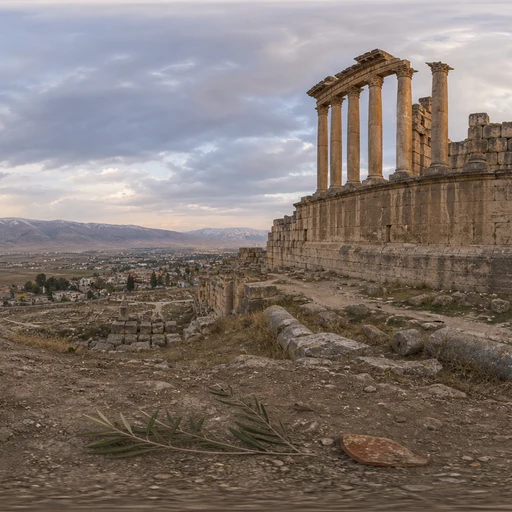
Ilyas at Baalbek
Time of Ilyas (peace be upon him)
Guess places like this in GeoSiyer
Drop into a 360° scene from Islamic history and pin where, and when, it happened.
Play GeoSiyer