Bukhara Madrasa Endowment
Students, stipends, bread, and books in an oasis madrasa
c. 1800 CE
 Educational historical reconstruction
Where
Bukhara, Emirate of Bukhara
39.7747, 64.4286 · View on OpenStreetMap
Background
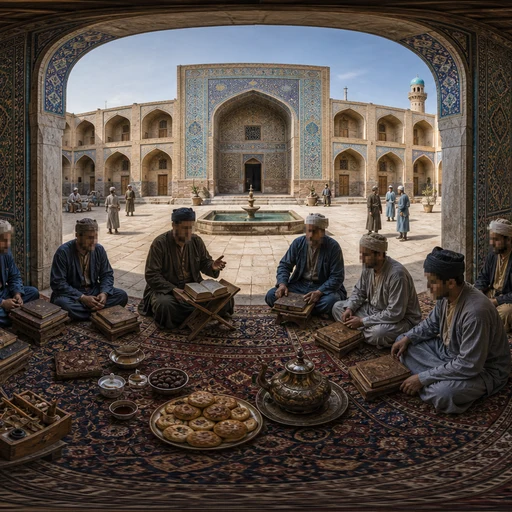
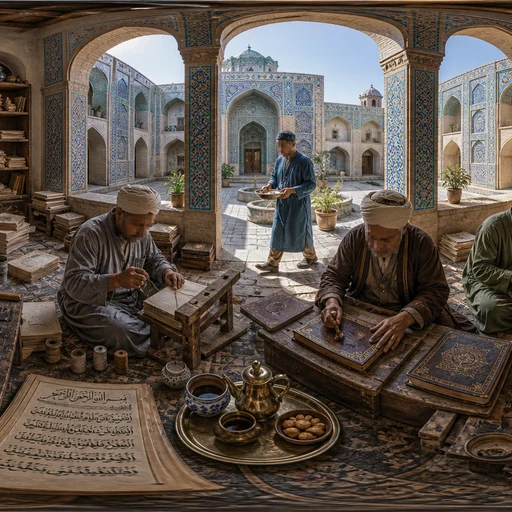
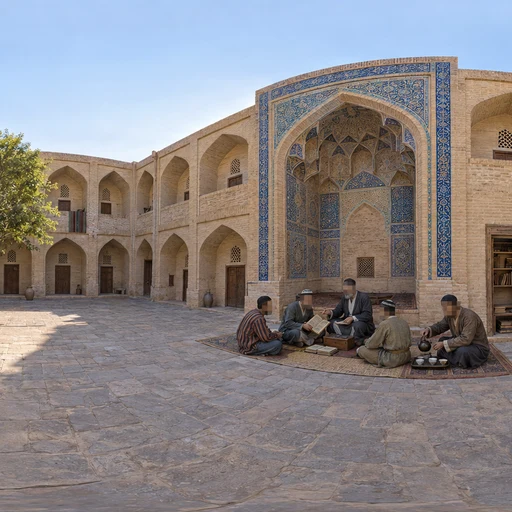
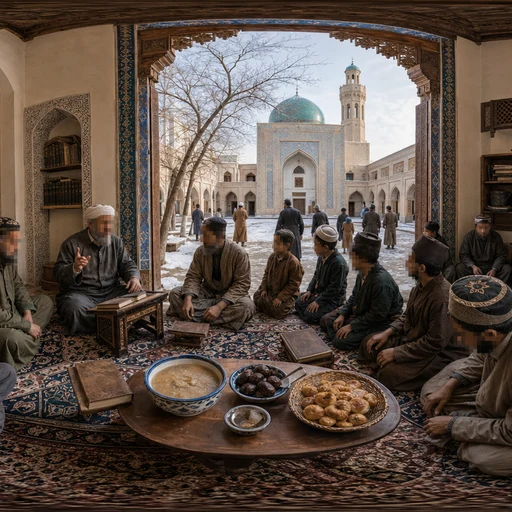
Bukhara was a city of madrasas, markets, mosques, and scholars whose reputation reached far beyond Central Asia. Around 1800, under the Emirate of Bukhara, learning still depended on material support: rooms, teachers, books, ink, bread, stipends, copyists, repairs, and revenue from endowed property. This scene presents a madrasa courtyard where the visual clues join scholarship to daily provision. Students sit with books and writing boards, a teacher leads study, bread and coins appear near a ledger, and turquoise tile anchors the place in Bukhara's built world. The date is approximate because the scene represents an institution and its economic life, not a single known class session. The point is that Islamic learning was never only an idea in the air. It required buildings, funding, food, time, and discipline. A waqf could make that learning more stable by connecting property income to salaries, rooms, lamps, books, or student support. The bread in the scene is not decoration. It reminds the viewer that scholarship has a body: students must eat, sleep, write, listen, and remain in a community long enough to learn.
What you see
A tiled portal, brick courtyard, and student cells point to a Central Asian madrasa.
Ink, books, bread, coins, and a ledger show study supported by material endowment.
Oasis light, dry brickwork, and turquoise tile fit Bukhara in Transoxiana.
Students gathered around a teacher make learning the central public activity.
This is institutional life rather than a single debate, graduation, or royal visit.
Bread and small payments hint at stipends that helped students remain in study.
The courtyard belongs to a city shaped by scholars, merchants, and long-distance routes.
Further reading & cross-references
Audrey Burton, The Bukharans: Used for Bukhara's nineteenth-century society, institutions, and the Emirate of Bukhara setting.
Adeeb Khalid, The Politics of Muslim Cultural Reform: Used for Central Asian Muslim educational culture and the later madrasa world.
Svat Soucek, A History of Inner Asia: Used for Transoxiana, Bukhara's historical place, oasis routes, and regional context.
Studies on Bukharan madrasas and student support: Used for student stipends, lodging, seasonal study, and the material limits of madrasa life.
Pascale Ghazaleh, Held in Trust: Used for waqf property, revenue, and institutional support across Islamic educational settings.
Questions & answers
- Where is Bukhara Madrasa Endowment?
- Bukhara, Emirate of Bukhara
- When did it happen?
- c. 1800 CE
- What is the story of Bukhara Madrasa Endowment?
- Bukhara was a city of madrasas, markets, mosques, and scholars whose reputation reached far beyond Central Asia. Around 1800, under the Emirate of Bukhara, learning still depended on material support: rooms, teachers, books, ink, bread, stipends, copyists, repairs, and revenue from endowed…
Related places
Guess places like this in GeoSiyer
Drop into a 360° scene from Islamic history and pin where, and when, it happened.
Play GeoSiyer