The Pursuit at Dhu Qarad
The raid on the grazing camels and the chase, 6 AH / c. 627 CE
6 AH / c. 627 CE
 Educational historical reconstruction
Where
Dhu Qarad and the pasture of al-Ghaba, north of Madinah
24.7200, 39.6200 · View on OpenStreetMap
Background
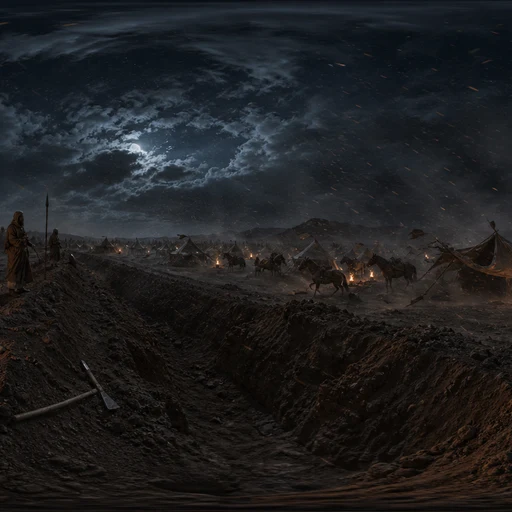
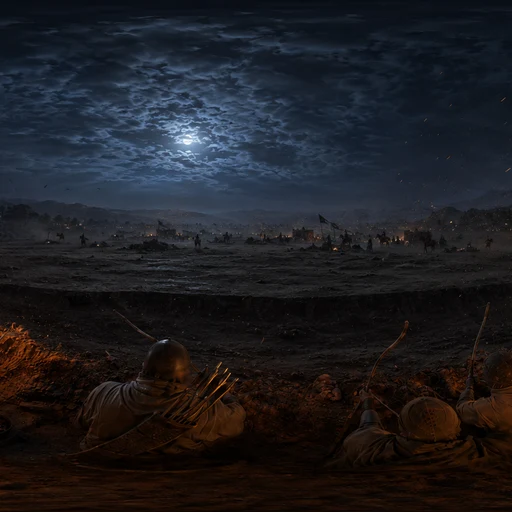
The expedition of Dhu Qarad, also called the affair of al-Ghaba, belongs to the later Madinan years, by the conventional dating in the sixth year after the migration (c. 627 CE), shortly before or around the time of the journey to Hudaybiyyah. Al-Waqidi in al-Maghazi and Ibn Sa'd relate that a band of horsemen of the Banu Ghatafan raided the pasture of al-Ghaba north of Madinah, where the Prophet's milch-camels were put out to graze, killed the herdsman, took his wife captive, and drove off the herd. The alarm was raised, and a swift pursuit set out; the fast-running Companion Salama ibn al-Akwa (radiyallahu 'anhu), who gave the first alarm and harried the raiders with his arrows as he ran after them on foot, gave a long first-hand account preserved in Sahih Muslim. The pursuit, joined by horsemen, pressed the raiders to a watering place called Dhu Qarad, from which the affair takes its name, and recovered most of the camels, while the raiders fled. The episode is one of the smaller engagements of the period, a defensive recovery of stolen herds rather than a great battle, and it shows the constant pressure of the surrounding tribes on the oasis in those years. This scene depicts the pasture and the pursuit: the grazing land and watering place of al-Ghaba in the rough country north of Madinah, the trampled track of the driven herd and the dust of distant riders, an overturned milking vessel and scattered pegs where the herd was taken. In keeping with the Sirah tier the riders are distant and anonymous and no individual is depicted; the fighting itself is not shown.
What you see
Grazing land with a watering place in the rough country north of the oasis of Madinah, the pasture of al-Ghaba where the herds were put out to feed, dry hills rising beyond.
A raiding band of horsemen has driven off the milch-camels from the pasture, and a pursuit is in train; the tracks of the driven herd and the chasing riders run off toward a watering place called Dhu Qarad.
The trampled track of the camels and the dust of riders lead away across the open country; this is a chase to recover stolen herds, not a set battle, told through the ground and the distant movement.
A raid by a desert band on the herds of Madinah and the swift pursuit that recovered most of them; one of the smaller engagements of the later Madinan years, in which a fast-running Companion, Salama ibn al-Akwa (radiyallahu 'anhu), distinguished himself. The scene shows the pasture and the pursuit track, not the fighting.
An overturned milking vessel and scattered tethering pegs by the watering place mark where the herd was taken; riders are distant specks on the track, kept anonymous.
The expedition of Dhu Qarad (al-Ghaba) is recorded by al-Waqidi and Ibn Sa'd, and the long account of Salama ibn al-Akwa (RA) is in Sahih Muslim. In the Sirah tier no person is depicted.
Primary sources
al-Waqidi, Kitab al-Maghazi (early 9th c.): The detailed Sunni record of the raid on al-Ghaba, the pursuit to Dhu Qarad, and the recovery of the herd.
Sahih Muslim (the account of Salama ibn al-Akwa, RA): The long first-hand narration of the raid and the pursuit by the Companion who raised the alarm; the primary hadith frame.
Ibn Sa'd, al-Tabaqat al-Kubra (9th c.): The catalogue placing the expedition of Dhu Qarad in the later Madinan years.
Further reading & cross-references
Safi al-Rahman al-Mubarakpuri, al-Rahiq al-Makhtum (20th c.): Modern Sunni synthesis for the dating and the course of the affair.
Topography of al-Ghaba and Dhu Qarad (regional): The pasture of al-Ghaba and the watering place of Dhu Qarad lay north of Madinah; the exact sites are not precisely fixed, so the location is regional.
Questions & answers
- Where is The Pursuit at Dhu Qarad?
- Dhu Qarad and the pasture of al-Ghaba, north of Madinah
- When did it happen?
- 6 AH / c. 627 CE
- What is the story of The Pursuit at Dhu Qarad?
- The expedition of Dhu Qarad, also called the affair of al-Ghaba, belongs to the later Madinan years, by the conventional dating in the sixth year after the migration (c. 627 CE), shortly before or around the time of the journey to Hudaybiyyah. Al-Waqidi in al-Maghazi and Ibn Sa'd relate that a band…
Related places




Guess places like this in GeoSiyer
Drop into a 360° scene from Islamic history and pin where, and when, it happened.
Play GeoSiyer