Ottoman Calligraphy Studio
Tools, manuscripts, and disciplined craft in Istanbul, Turkey
c. 1800 CE
 Educational historical reconstruction
Where
Istanbul, Turkey
41.0082, 28.9784 · View on OpenStreetMap
Background
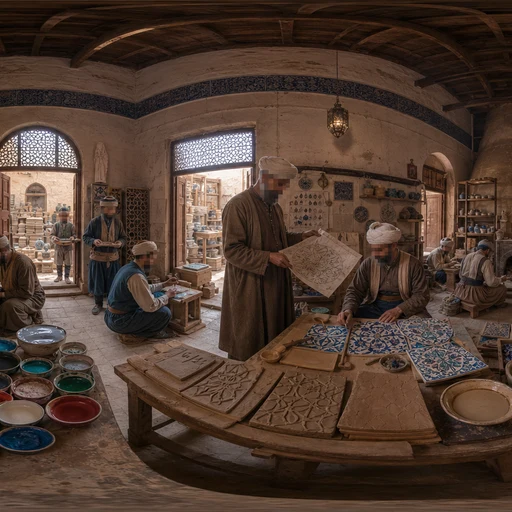
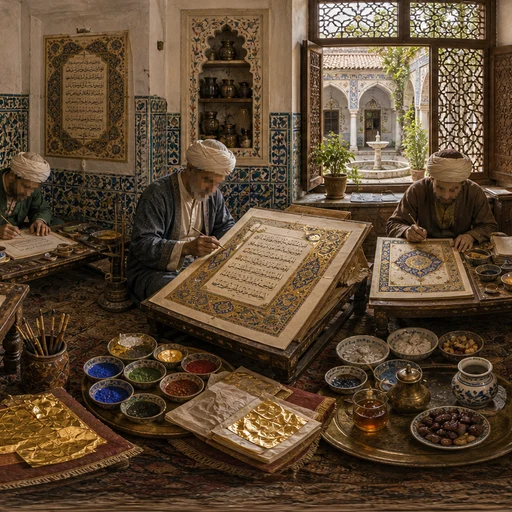
Ottoman Calligraphy Studio brings Islamic learning into the workshop, where beauty depends on disciplined hands in Istanbul, Turkey. The visible details, Reed pens, ink, burnishing tools, master/apprentices, no readable finished text needed, show that manuscripts were made through tools, training, correction, patience, and respect for sacred and scholarly texts. The c. 1800 CE date gives a clear frame while still allowing for local variation. This is not a claim that one named gathering happened exactly this way; it is a careful place study built from visible material culture. The scene matters because Islamic civilization is not only preserved in capitals, armies, dynasties, and famous books. It is also carried by repeated practices: how people learn, host, eat, repair, mourn, prepare for worship, and make room for neighbors. Here, knowledge is preserved by trained hands as well as by memory. Pens, pigments, paper, bindings, correction, and patient apprenticeship turn devotion into durable objects. Reed pens, ink, paper, pigments, bindings, teachers, apprentices, and careful manuscript work make the scene a study of tools, adab, and care.
What you see
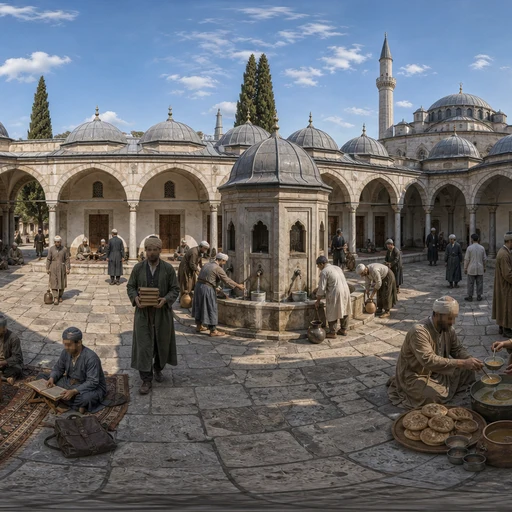
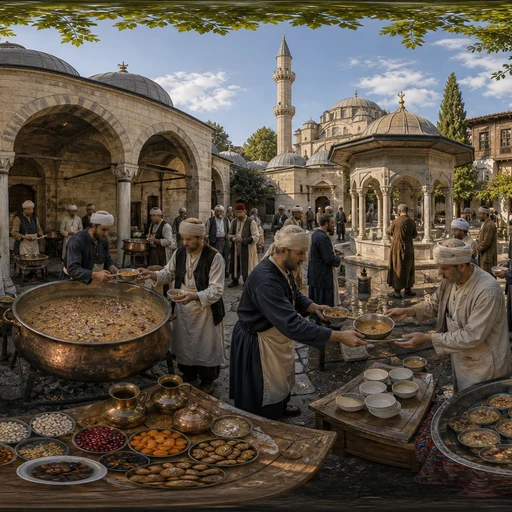
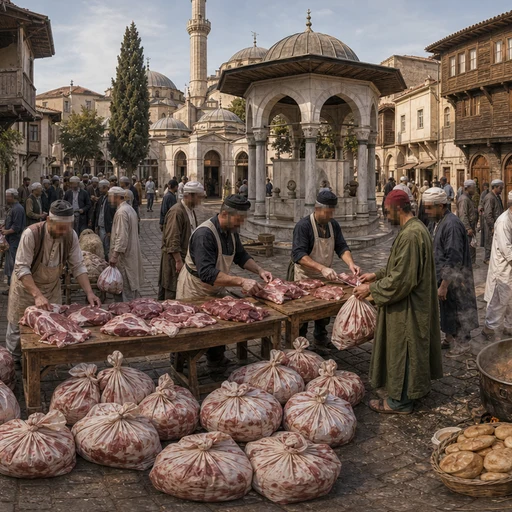
Istanbul, Turkey is suggested by the climate, street life, buildings, and regional materials around the gathering.
One concrete local clue is visible here: Reed pens.
Ink and burnishing tools make the subject specific rather than generic.
Mosque, home, market, courtyard, workshop, cemetery, or street details show how the space is used.
The action centers on copying, binding, illumination, correction, and tool care, not on a ruler's court, battle, or isolated spectacle.
Master/apprentices connects personal devotion to family, neighbors, craft, learning, or public service.
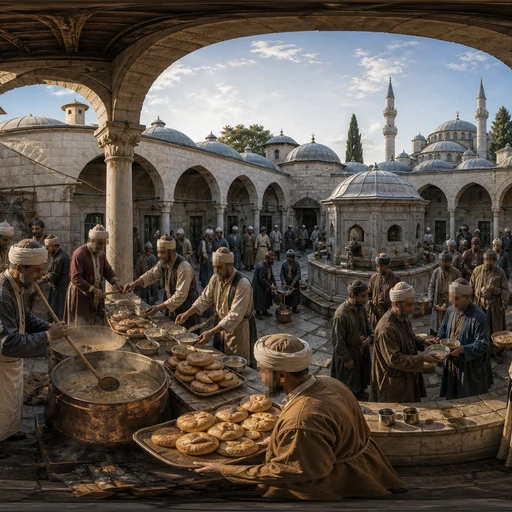
People moving through the scene connect worship with work, food, travel, study, and care.
Further reading & cross-references
Regional references for Istanbul, Turkey: Used for local geography, architecture, dress, food, and the social setting of Ottoman Calligraphy Studio.
Islamic manuscript craft studies: Used for reed pens, ink, paper, pigments, bindings, teachers, apprentices, and careful manuscript work.
Islamic practice references: Used for mosque life, learning, hospitality, family duties, charity, Ramadan worship, or funeral etiquette as relevant.
Material culture references: Used for visible details such as Reed pens, ink, burnishing tools, master/apprentices, no readable finished text needed.
Local daily-life references: Used for ordinary work, movement, meals, courtyards, markets, homes, and community support.
Questions & answers
- Where is Ottoman Calligraphy Studio?
- Istanbul, Turkey
- When did it happen?
- c. 1800 CE
- What is the story of Ottoman Calligraphy Studio?
- Ottoman Calligraphy Studio brings Islamic learning into the workshop, where beauty depends on disciplined hands in Istanbul, Turkey. The visible details, Reed pens, ink, burnishing tools, master/apprentices, no readable finished text needed, show that manuscripts were made through tools, training,…
Guess places like this in GeoSiyer
Drop into a 360° scene from Islamic history and pin where, and when, it happened.
Play GeoSiyer