Ottoman Imaret Kitchen
A waqf soup kitchen serving travelers and the poor
c. 1700 CE
 Educational historical reconstruction
Where
Istanbul, Ottoman Empire
41.0082, 28.9784 · View on OpenStreetMap
Background
An Ottoman imaret was a public kitchen funded through waqf income, usually attached to a larger religious and social complex. This scene places the viewer in an Istanbul kitchen around 1700, when soup, bread, grain, fuel, wages, and building upkeep were tied to endowed revenues and written rules. The institution served many kinds of people: travelers, students, mosque staff, Sufis, the poor, and sometimes workers attached to the complex. The point is not a royal banquet. It is organized mercy made visible through cauldrons, ladles, bread trays, storerooms, staff, ledgers, and a respectful queue. Ottoman charity was not only personal almsgiving. It also created durable urban services that could feed people every day and link worship, law, property, and neighborhood life. The approximate date marks a mature Ottoman charitable world rather than one famous opening day. The clues ask for the kind of place as much as the city: a mosque-centered endowment where food, administration, and dignity stand together. In a broad history of Islamic civilization, the imaret matters because it turns the waqf from an abstract legal idea into something warm, practical, and public.
What you see
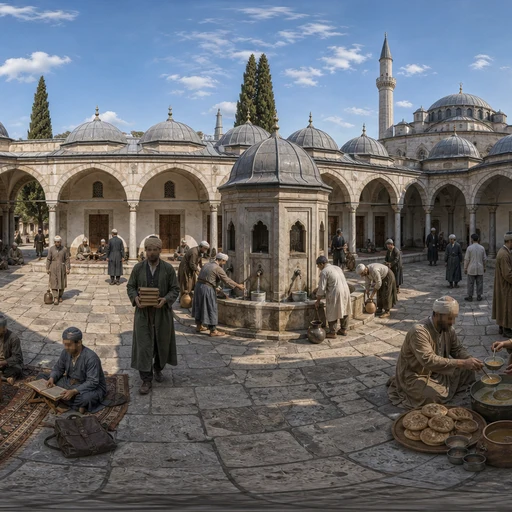
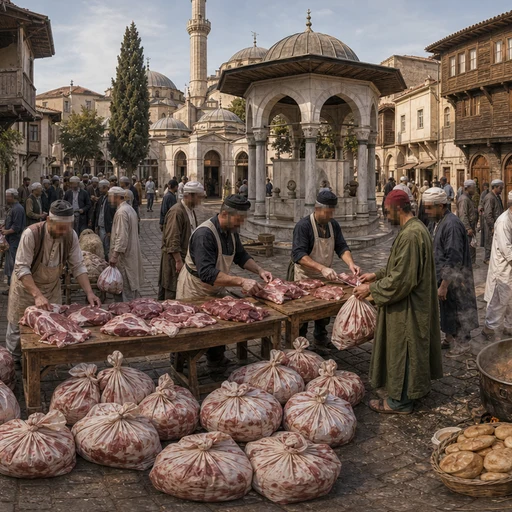
Domed courtyards, stone arcades, and a mosque complex setting point toward an Ottoman charitable foundation.
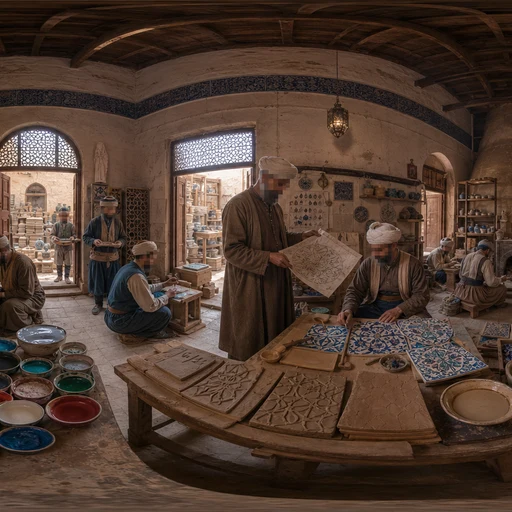
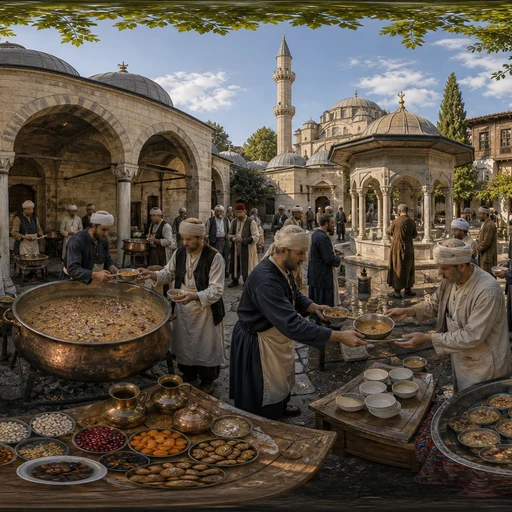
Large copper cauldrons, ladles, bread trays, sacks of grain, and serving bowls make the kitchen the center of the scene.
People receiving food in an orderly courtyard show public charity rather than private hospitality.
The urban mosque complex, tiled details, and imperial Ottoman forms fit Istanbul more closely than a rural Anatolian town.
There is no single battle or ceremony here; the subject is a recurring waqf service.
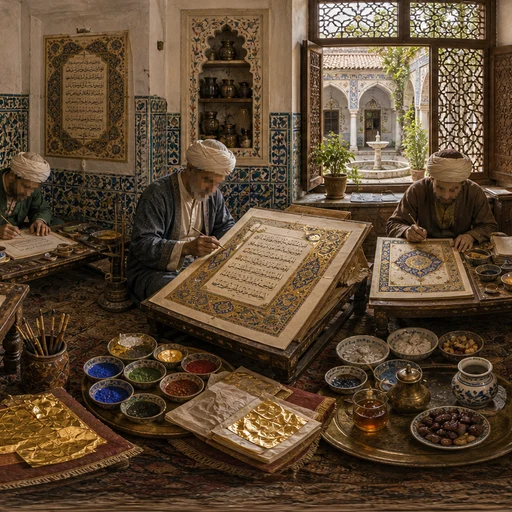
Ledger books and kitchen workers suggest regulated endowment income, staff duties, and rationed distribution.
Bread and soup connect worship, poverty relief, student life, and travel inside one institution.
Further reading & cross-references
Amy Singer, Constructing Ottoman Beneficence: Used for Ottoman public kitchens, waqf funding, recipients, rules, and the social meaning of cooked food charity.
Amy Singer, Serving up Charity: Used for imaret menus, distribution patterns, staff, and the regulated nature of food service.
Godfrey Goodwin, A History of Ottoman Architecture: Used for mosque complex architecture, domes, courtyards, kitchens, and Ottoman urban building forms.
Timur Kuran, The Provision of Public Goods under Islamic Law: Used for the waqf as an institutional mechanism supporting public goods and durable services.
Suraiya Faroqhi, Subjects of the Sultan: Used for Ottoman urban life, provisioning, craft labor, and the social setting of seventeenth-century cities.
Questions & answers
- Where is Ottoman Imaret Kitchen?
- Istanbul, Ottoman Empire
- When did it happen?
- c. 1700 CE
- What is the story of Ottoman Imaret Kitchen?
- An Ottoman imaret was a public kitchen funded through waqf income, usually attached to a larger religious and social complex. This scene places the viewer in an Istanbul kitchen around 1700, when soup, bread, grain, fuel, wages, and building upkeep were tied to endowed revenues and written rules.…
Guess places like this in GeoSiyer
Drop into a 360° scene from Islamic history and pin where, and when, it happened.
Play GeoSiyer