Sahel Zawiya Charity Feeding
Travelers, millet, and hospitality beside an adobe lodge
c. 1850 CE
 Educational historical reconstruction
Where
Sahel, West Africa
14.5000, -3.0000 · View on OpenStreetMap
Background
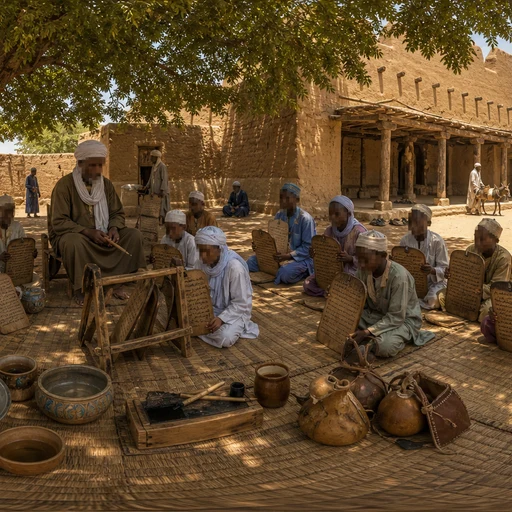
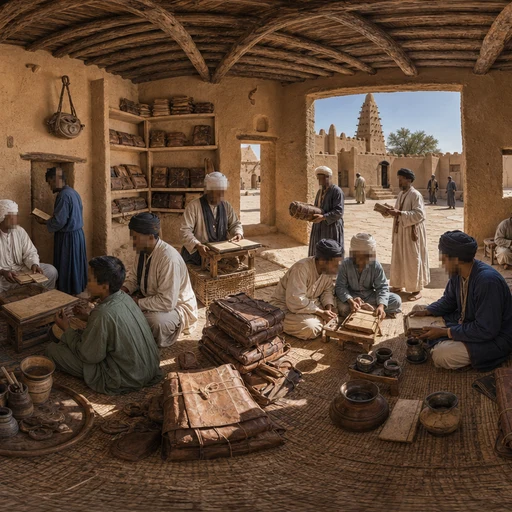
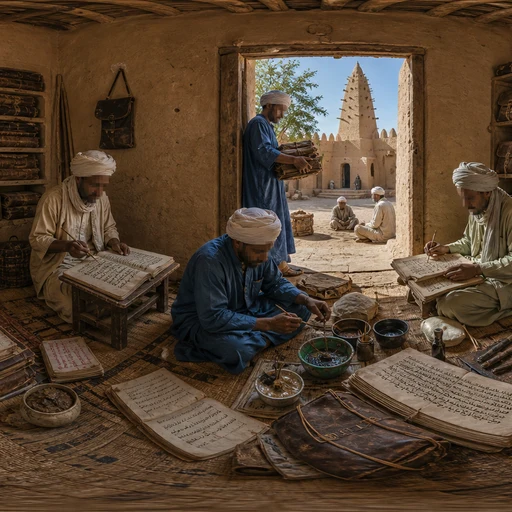
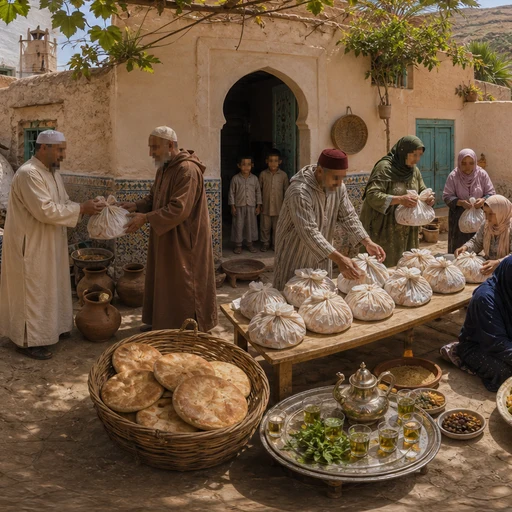
Across the Sahel, Muslim learning and hospitality often met in modest places rather than monumental capitals. A zawiya could be a lodge, teaching space, devotional center, guest place, or local node in a wider network of scholars and travelers. This scene sets the viewer in a West African Sahel environment around 1850, with adobe walls, timber details, sandy ground, mats, calabash bowls, millet porridge, water vessels, travelers, students, and a shade tree. The location is regional because the visual subject is a type of institution spread across a broad zone, not one named building. The date is also approximate, marking a nineteenth-century world of travel, study, trade, Sufi affiliation, and local hospitality. The food is plain on purpose. Millet porridge, water, and shade teach a scale of care that suited the environment. Islamic charity did not always look like a grand stone complex. In the Sahel, it could appear as a bowl passed to a traveler, a teacher hosting students, a recitation circle near an adobe wall, or a local community making room for someone on the road. The scene makes small institutions visible without turning them into fantasy or palace life.
What you see
Adobe walls, timber projections, and a shaded courtyard point toward the Sahel.
Calabash bowls, millet porridge, water skins, and woven mats show food suited to local materials.
Travelers seated under a tree suggest hospitality at a zawiya or scholarly lodge.
The sandy ground, sparse shade, and mud architecture distinguish West Africa from North Africa or Arabia.
The scene represents ongoing care for students and travelers, not a named battle or ruler's court.
Pack animals and resting guests point to Sahelian movement between market towns, study centers, and grazing lands.
Food, water, shade, and recitation turn the lodge into a small center of Muslim social life.
Further reading & cross-references
Nehemia Levtzion, Ancient Ghana and Mali: Used for Islam, trade, scholarship, and Muslim networks in the western Sahel.
John Hunwick, Timbuktu and the Songhay Empire: Used for West African Islamic scholarship and scholarly communities linked to Sahelian routes.
David Robinson, Muslim Societies in African History: Used for Muslim social institutions, Sufi networks, and regional variety in West Africa.
Louis Brenner, Controlling Knowledge: Used for Islamic education, clerical authority, and religious learning in Mali and the Sahel.
West African food-history references on millet and calabashes: Used for millet porridge, vessels, and local food material culture.
Questions & answers
- Where is Sahel Zawiya Charity Feeding?
- Sahel, West Africa
- When did it happen?
- c. 1850 CE
- What is the story of Sahel Zawiya Charity Feeding?
- Across the Sahel, Muslim learning and hospitality often met in modest places rather than monumental capitals. A zawiya could be a lodge, teaching space, devotional center, guest place, or local node in a wider network of scholars and travelers. This scene sets the viewer in a West African Sahel…
Related places
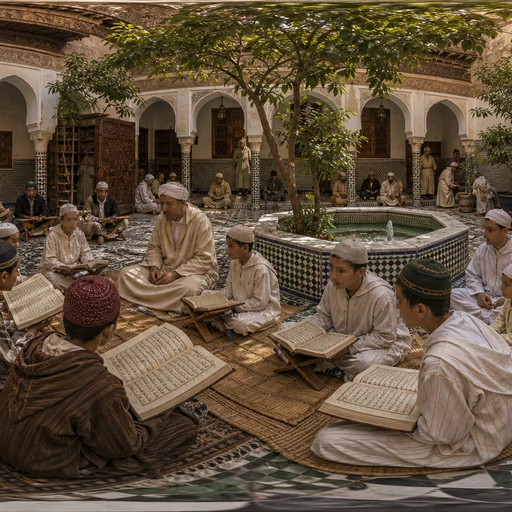
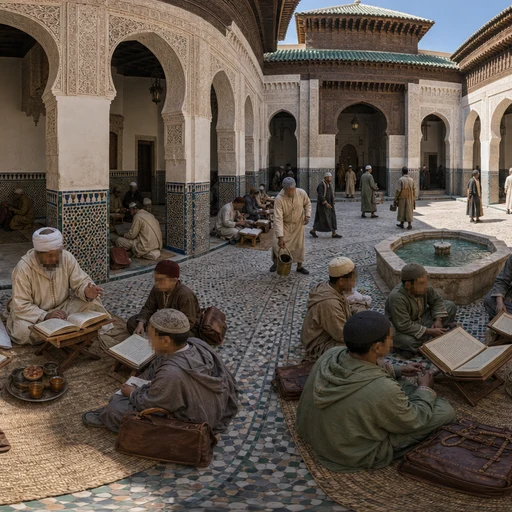
Guess places like this in GeoSiyer
Drop into a 360° scene from Islamic history and pin where, and when, it happened.
Play GeoSiyer