Damascus Caravanserai Waqf
Rest, trade, and endowed hospitality in an Ottoman khan
c. 1750 CE
 Educational historical reconstruction
Where
Damascus, Ottoman Syria
33.5138, 36.2765 · View on OpenStreetMap
Background
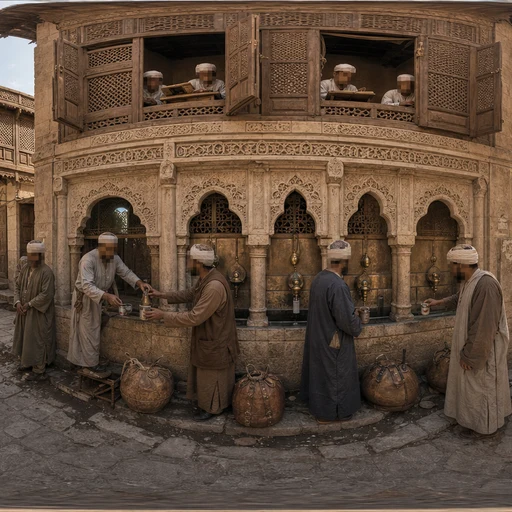
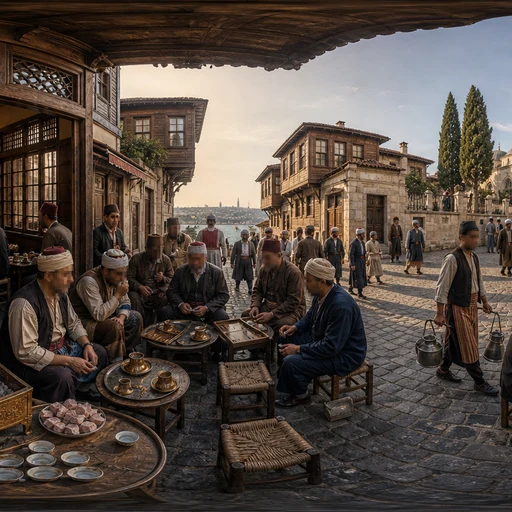
Damascus sat on routes linking Anatolia, Iraq, Arabia, Palestine, and the Mediterranean. By about 1750, the Ottoman city held busy khans where merchants stored goods, travelers rested, animals were watered, and deals were made under vaulted arcades. This scene treats a caravanserai as a charitable and commercial institution at the same time. The courtyard contains pack animals, bread, water jars, sacks, scales, ledgers, shopfronts, and places to sit. Those details show why a khan mattered: it protected goods, organized movement, fed bodies, and joined long-distance trade to local urban life. Some caravanserais and their revenues were tied to waqf arrangements, with rents supporting mosques, schools, water, or maintenance. The exact building is not the lesson. The lesson is the pattern of endowed infrastructure that made travel safer and commerce more stable. The approximate date gives a playable eighteenth-century anchor for Ottoman Damascus. A traveler entering such a courtyard would read more than trade. He would see law, trust, hospitality, water management, animal care, and the city's role as a meeting point for the wider Muslim world.
What you see
A vaulted courtyard khan, stone arcades, and a central basin fit Ottoman Damascus.
Loaded animals, merchants, and resting travelers point to caravan routes crossing Syria.
Bread, water vessels, sacks, scales, and ledgers show commerce mixed with hospitality.
The dry urban courtyard and Damascene stonework distinguish the scene from Cairo or Istanbul.
Free water and food in a trading space hint at waqf support rather than a purely private inn.
The subject is an institution serving movement and trade, not a named caravan departure.
Small shops and upper rooms around the courtyard show how lodging, storage, and commerce shared one building.
Further reading & cross-references
Abdul-Karim Rafeq, The Province of Damascus: Used for Ottoman Damascus society, trade, guilds, and urban institutions in the eighteenth century.
Museum With No Frontiers, Khan al-Harir entry: Used for a Damascene Ottoman caravanserai founded as a waqf and for courtyard architectural cues.
Ross Burns, Damascus: Used for the city's long urban history, built environment, and place on regional routes.
Suraiya Faroqhi, Pilgrims and Sultans: Used for Ottoman travel, route infrastructure, provisioning, and the movement of people through Syria.
Pascale Ghazaleh, Held in Trust: Used for waqf revenue, property, and institutional support in Islamic urban settings.
Questions & answers
- Where is Damascus Caravanserai Waqf?
- Damascus, Ottoman Syria
- When did it happen?
- c. 1750 CE
- What is the story of Damascus Caravanserai Waqf?
- Damascus sat on routes linking Anatolia, Iraq, Arabia, Palestine, and the Mediterranean. By about 1750, the Ottoman city held busy khans where merchants stored goods, travelers rested, animals were watered, and deals were made under vaulted arcades. This scene treats a caravanserai as a charitable…
Related places



Guess places like this in GeoSiyer
Drop into a 360° scene from Islamic history and pin where, and when, it happened.
Play GeoSiyer